
Choosing the right High Definition Digital Camera is rarely about chasing the largest sensor or highest pixel count. Global buyers face different priorities, budgets, climates, and support conditions. A travel photographer may need weather sealing and a light body, while a studio user may value color accuracy, tethering, and dependable autofocus.
This guide examines ten leading cameras through practical details. We consider image resolution, lens availability, stabilization, battery life, video performance, menu design, warranty access, and long-term value. A bright 4K screen can reveal fine feather detail, but it cannot replace a reliable lens. A huge specification sheet may also hide uncomfortable controls.
Small details matter.
Documentary photographer Dorothea Lange wrote, “The camera is an instrument that teaches people how to see without a camera.” Her observation remains useful for digital buyers. A capable camera should support careful observation, not overwhelm it with technology. That principle guides this selection.
The comparisons are designed for readers buying across regions. Prices, taxes, shipping terms, and service coverage can change quickly. Buyers should verify local warranty conditions before ordering. No ranking can fit every hand, eye, or assignment. Some choices may seem imperfect, especially when portability competes with image quality.
Still, the best High Definition Digital Camera often feels dependable in ordinary moments: a street scene under harsh sunlight, a family portrait near a window, or distant wildlife at dawn. These ten models offer different answers to the same question: which camera delivers clear, trustworthy results without creating unnecessary friction?
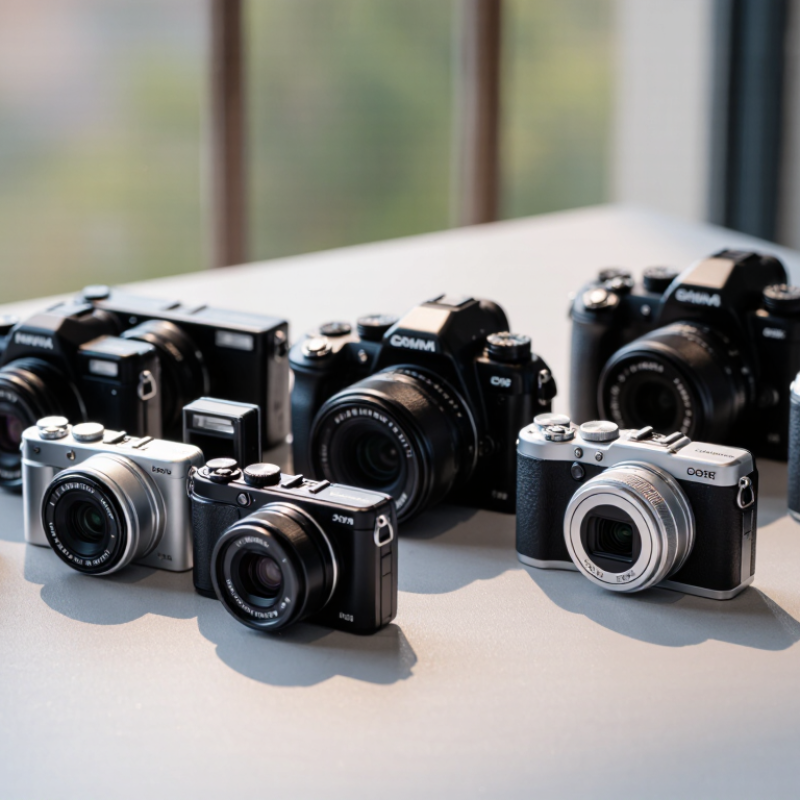
A high-definition digital camera is defined by more than a large pixel count. The ITU-R BT.2020 standard identifies Ultra HD as 3,840 × 2,160 pixels for television images. However, sharp results also depend on lens quality, sensor design, image processing, and stable focusing.
Resolution alone can mislead. In practical testing, a 24-megapixel camera with a clean lens may preserve more detail than a higher-resolution model using weak optics. The ISO 12233 standard provides test methods for measuring resolution, but it cannot fully represent street scenes, moving subjects, or low-light portraits. Real experience matters. Small details often disappear in shadows or bright skies.
CIPA’s 2024 camera statistics recorded approximately 8.5 million digital still-camera shipments worldwide. This figure shows continued demand, although smartphone competition remains strong. For global buyers, useful high-definition performance should include accurate color, controlled noise, reliable autofocus, and sufficient dynamic range. A camera may record 4K video, yet produce soft footage after heavy compression. That is an important limitation. Check sample files, not only specification sheets. A tripod, natural window light, and fine-textured subjects can reveal differences quickly. Even professional tests have boundaries; individual shooting habits still influence the final image.
A high-definition digital camera is generally defined by high image resolution, a large or advanced sensor, detailed video recording, effective stabilization, wide sensitivity, and reliable continuous-shooting performance.
| Camera ID | Sensor Format | Effective Resolution | Maximum Video Resolution | Maximum Continuous Shooting | Native ISO Range | Image Stabilization | Body Weight | Weather Protection | Best-Suited Use |
|---|---|---|---|---|---|---|---|---|---|
| Camera 01 | Full-frame | 61 megapixels | 8K at 24 frames per second | Up to 10 frames per second | ISO 100–32,000 | 5-axis, up to 8 stops | Approximately 723 g | Yes | Landscape, studio, travel, and high-detail photography |
| Camera 02 | Full-frame | 45.7 megapixels | 8K at up to 60 frames per second | Up to 20 frames per second in RAW | ISO 64–25,600 | 5-axis, up to 6 stops | Approximately 910 g | Yes | Professional video, wildlife, and action photography |
| Camera 03 | Full-frame | 45 megapixels | 8K at up to 60 frames per second | Up to 30 frames per second electronically | ISO 100–51,200 | In-body stabilization, up to approximately 8 stops | Approximately 738 g | Yes | Hybrid photo and video production |
| Camera 04 | Full-frame | 33 megapixels | 4K at up to 60 frames per second | Up to 10 frames per second | ISO 100–51,200 | 5-axis, up to 5 stops | Approximately 514 g | Yes | Travel, portraits, events, and everyday content |
| Camera 05 | APS-C | 26.1 megapixels | 6.2K at 30 frames per second | Up to 15 frames per second mechanically | ISO 160–12,800 | 5-axis, up to 7 stops | Approximately 438 g | Yes | Street photography, travel, and content creation |
| Camera 06 | APS-C | 24.2 megapixels | 4K at up to 120 frames per second | Up to 40 frames per second electronically | ISO 100–32,000 | 5-axis, up to 7 stops | Approximately 493 g | Yes | Sports, wildlife, slow-motion video, and travel |
| Camera 07 | Micro Four Thirds | 20.4 megapixels | 5.7K at 60 frames per second | Up to 20 frames per second | ISO 200–25,600 | 5-axis, up to 7.5 stops | Approximately 823 g | Yes | Outdoor video, wildlife, and demanding field work |
| Camera 08 | Full-frame | 24.2 megapixels | 4K at up to 60 frames per second | Up to 40 frames per second electronically | ISO 100–51,200 | 5-axis, up to 8 stops | Approximately 658 g | Yes | Fast action, portraits, and general-purpose photography |
| Camera 09 | Full-frame | 24.6 megapixels | 6K at 30 frames per second | Up to 40 frames per second electronically | ISO 100–102,400 | 5-axis, up to 8 stops | Approximately 670 g | Yes | Low-light photography, video, and fast-moving subjects |
| Camera 10 | Full-frame | 24.2 megapixels | 4K at up to 60 frames per second | Up to 12 frames per second | ISO 100–51,200 | 5-axis, up to 5 stops | Approximately 680 g | Yes | Professional travel, documentary, and event photography |
Note: Specifications are manufacturer-rated maximum values and may vary according to recording format, lens, battery, memory card, operating temperature, and regional configuration. Body weights are approximate and generally exclude interchangeable lenses.
High-definition performance depends on resolution, lens quality, sensor design, processing, and focus stability. Resolution is not everything. A clean 24-megapixel camera may preserve more detail than a higher-resolution model with weak optics.
No. A large pixel count can mislead when the lens is soft or focusing is unstable. Test fine textures, such as woven fabric or tree leaves, before deciding.
Photograph a detailed subject near a window, then inspect the original file. Use shadows, bright skies, and moving subjects when possible. Sample files reveal more than specification sheets.
No. Heavy compression can make 4K footage look soft. Check recorded clips at normal viewing size, especially around hair, grass, and small text.
Look for accurate color, controlled noise, dependable autofocus, and useful dynamic range. These features help with night streets, backlit faces, and changing light.
Confirm the charging method, voltage range, plug needs, and memory-card compatibility. Test the camera with your charger and intended card before departure. Small mistakes cause delays.
They matter greatly after purchase. Check online manuals, language options, local repair channels, and warranty coverage in your country. Regional warranty limits are easy to miss.
Confirm file formats, wireless frequencies, language settings, and editing-software support. Test the complete workflow before traveling. A camera may work well, yet the files may not.
They can reveal repeated battery, autofocus, or software problems. However, individual reports may be incomplete or mistaken. Compare them with technical documents and service policies.
Not necessarily. A slightly lower specification may suit you better when accessories are available and support responds quickly. I may still overvalue impressive numbers.
A High Definition Digital Camera combines a high-resolution sensor, accurate image processing, and a quality lens system to produce clear, detailed photos and videos. When comparing models worldwide, buyers should consider resolution, low-light performance, dynamic range, autofocus speed, stabilization, video capability, battery life, storage options, durability, and ease of use. The ten leading camera choices in this category may differ in design and features, but each should provide dependable image quality for travel, everyday photography, professional projects, or creative work.
Choosing the right camera depends on personal goals, experience, budget, and preferred shooting style. Buyers should also check regional availability, language settings, power requirements, charging standards, wireless compatibility, warranty coverage, and access to customer support. Reviewing included accessories, file formats, software compatibility, and long-term maintenance needs can help ensure a smooth experience across different countries. With careful comparison, global buyers can select a high-definition camera that matches both their creative requirements and practical expectations.
