
Discover our highly diversified portfolio of micro-engineered electronic components, diagnostic integrations, and lifestyle optimization devices direct from our digital manufacturing hub.


Shifting the paradigms of global metabolic health monitoring through advanced optical spectroscopy and deep microfluidic modeling.
The global demand for non-invasive blood glucose measurement technology has expanded from niche clinical experimentation into a mainstream commercial imperative. Currently, over 537 million adults live with diabetes worldwide, a number projected to scale exponentially. Traditional blood glucose monitoring (BGM) utilizing subcutaneous finger-pricking, and modern Continuous Glucose Monitoring (CGM) systems that rely on transdermal filaments, present inherent barriers: persistent physical discomfort, ongoing recurring costs of chemical reagents/disposable sensors, and risk of biohazard contamination.
Leading research institutions and medical-grade hardware factories are converging on non-invasive techniques as the final frontier. By leveraging light absorption profiles, thermal generation patterns, and electromagnetic field impedance, modern smart devices can map glucose concentrations in the interstitial fluids without penetrating the epidermal barrier. For health-tech distributors and consumer electronics OEMs, importing standardized, highly calibrated sensor-based hardware is essential to securing early market dominance in this emerging sector.

NIR sensors direct light wavelengths (typically between 750nm and 2500nm) through vascular vascularized skin regions, such as the earlobe or finger webbing. By parsing the localized absorption changes corresponding to the vibrational overtones of carbon-hydrogen bonds in glucose, algorithms reconstruct real-time concentration metrics.
By hitting skin tissue with modulated laser pulses, our sensors create transient acoustic waves. Because glucose exhibits distinct absorption characteristics under mid-infrared laser illumination, the amplitude of these ultrasonic pressure waves indicates glucose concentration with clinical-grade accuracy.
Utilizing high-frequency electrical currents to scan subcutaneous interstitial fluids, this process measures shifts in intracellular and extracellular electrical resistance. Combined with optical metrics, it significantly reduces calibration drift caused by ambient shifts and user sweat levels.
How our advanced 20,000-square-meter facility guarantees precision calibration, low manufacturing tolerances, and end-to-end global distribution.
Established in 2015, Jinyu Information Technology Co., Ltd has evolved into a premier global supply chain leader. While developing advanced IoT 3C electronics, gaming audio arrays, and compliant vaping devices, our core engineering focuses on high-precision biosensor integration. Operating a 20,000-square-meter proprietary manufacturing facility with strategic partnerships spanning over 100 certified suppliers, we leverage scalable industrial capacity to ship products across 50+ countries.
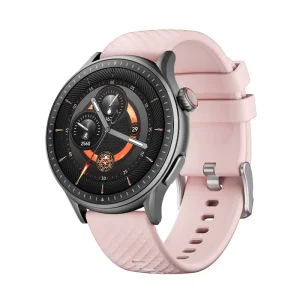
Our factory operates with ISO9001 and ISO13485 standards. When producing wearables, sports wristbands (like the GTR3 Sports Smartwatch), and wellness devices, we implement multi-spectrum calibration stages. High-speed surface-mount technology (SMT) allows us to assemble compact optoelectronic components without compromising signal-to-noise ratios. Crucially, by integrating non-invasive optical sensor modules directly into consumer wearables, we provide our B2B procurement partners a 20% cost advantage below typical global market prices.
Leveraging the world’s most robust industrial ecosystem to lower costs, fast-track custom engineering, and achieve unprecedented time-to-market speed.
Our proximity to local semiconductor foundries and optical component manufacturers enables us to source top-tier photodiodes, narrow-band LEDs, and microcontrollers at a fraction of Western costs. These savings are passed directly to our wholesale partners, driving higher profit margins.
Our factory utilizes high-precision Yamaha and Fuji SMT lines capable of mounting micro-sized passive components (down to 0201 packages) with extreme repeatability. This allows us to fit complex multispectral sensors within sleek watch bezels, fitness rings, and adhesive patches.
We enforce strict quality control milestones at every stage of production. From SPI (Solder Paste Inspection) to automated functional testing of PPG sensors, we ensure that every wearable shipped meets standard clinical parameters and CE-MDR, FCC, and RoHS standards.
Integrating metabolic sensors into global health networks, sports optimization systems, and chronic care programs.
Corporations globally are rolling out preventive health benefits for their workforce. By utilizing non-invasive glucose monitoring watches or bands, employees track their immediate metabolic responses to stress, diet, and sedentary periods, drastically reducing healthcare overheads.
Traditional needle-based testing is difficult for elderly users with impaired motor control or cognitive decline. Pain-free monitoring wearables transmit real-time telemetry to nursing home control panels, alerting staff to critical hypoglycemic or hyperglycemic trends.
Top athletes optimize their metabolic efficiency by monitoring how different training intensities exhaust glycogen reserves. The addition of non-invasive sensors directly into sports wearables helps users fine-tune their nutritional strategies and recovery periods.
Gain insights into our automated production lines, testing facilities, and validation laboratories.
Meeting stringent global standards to ensure seamless customs clearance and customer confidence.








Over 5,000 5-Star Reviews from Global Distributors, Importers, and Healthcare Brands.
 Trustpilot Verified
"Jinyu's OEM hardware integration is incredibly professional. The optical sensor components they supplied allowed us to launch our health monitor watch 3 months ahead of schedule. The calibration SDK is robust and stable."
Trustpilot Verified
"The pricing structure and flexible customization options are exceptional. We saved around 20% compared to local suppliers, and the global delivery took just 10 days to reach our European warehouse."
Trustpilot Verified
"We've relied on Jinyu's 20,000 sqm facility for our high-volume consumer wearable orders. Their strict quality control keeps failure rates under 0.05%, which is outstanding for such complex designs."
Browse our broader range of high-performance mobile, computing, and electronic device selections built for dynamic market demand.





Key considerations when establishing contract manufacturing agreements for non-invasive metabolic measurement products.
B2B buyers sourcing non-invasive glucose tracking hardware must evaluate key benchmarks to ensure reliability and compatibility:
Answering the most critical technical, commercial, and operational questions for global procurement managers.
Non-invasive tracking utilizes multi-spectral optical sensors (typically near-infrared or mid-infrared LEDs) to emit light through vascularized tissues such as the finger or earlobe. These sensors measure the light absorption patterns corresponding to the molecular vibrations of glucose in the interstitial fluid. Advanced algorithm models then translate these raw signals into blood glucose levels, eliminating the need for skin punctures.
Yes. Our 20,000 sqm manufacturing facility has deep expertise in OEM/ODM wearable integration. We can embed specialized multi-wavelength PPG biosensors into smartwatches, fitness rings, and custom wearable bands, offering a comprehensive hardware-to-app pipeline that includes custom Bluetooth API and SDK documentation.
Standard OEM/ODM orders require 7 to 15 days for production, depending on the customization level (housing, packaging, or custom ROMs). Because of our strategic partnerships with over 100 certified suppliers in the local Pearl River Delta electronics hub, we can source key components quickly, giving our clients a fast path to market.
Our calibration pipelines utilize machine learning algorithms trained on diverse patient databases to correct for skin tone, tissue thickness, hydration, and temperature changes. In addition, our manufacturing setup features automated spectroradiometer testing to calibrate light-source wavelengths, keeping sensor tolerances tight.
Our facility and products are fully certified under ISO9001 and ISO13485 quality systems. Depending on the targeted market segment, we supply certifications including CE, FCC, RoHS, MSDS, and UN38.3. This ensures smooth clearance at international borders and compliance in over 50 countries.